
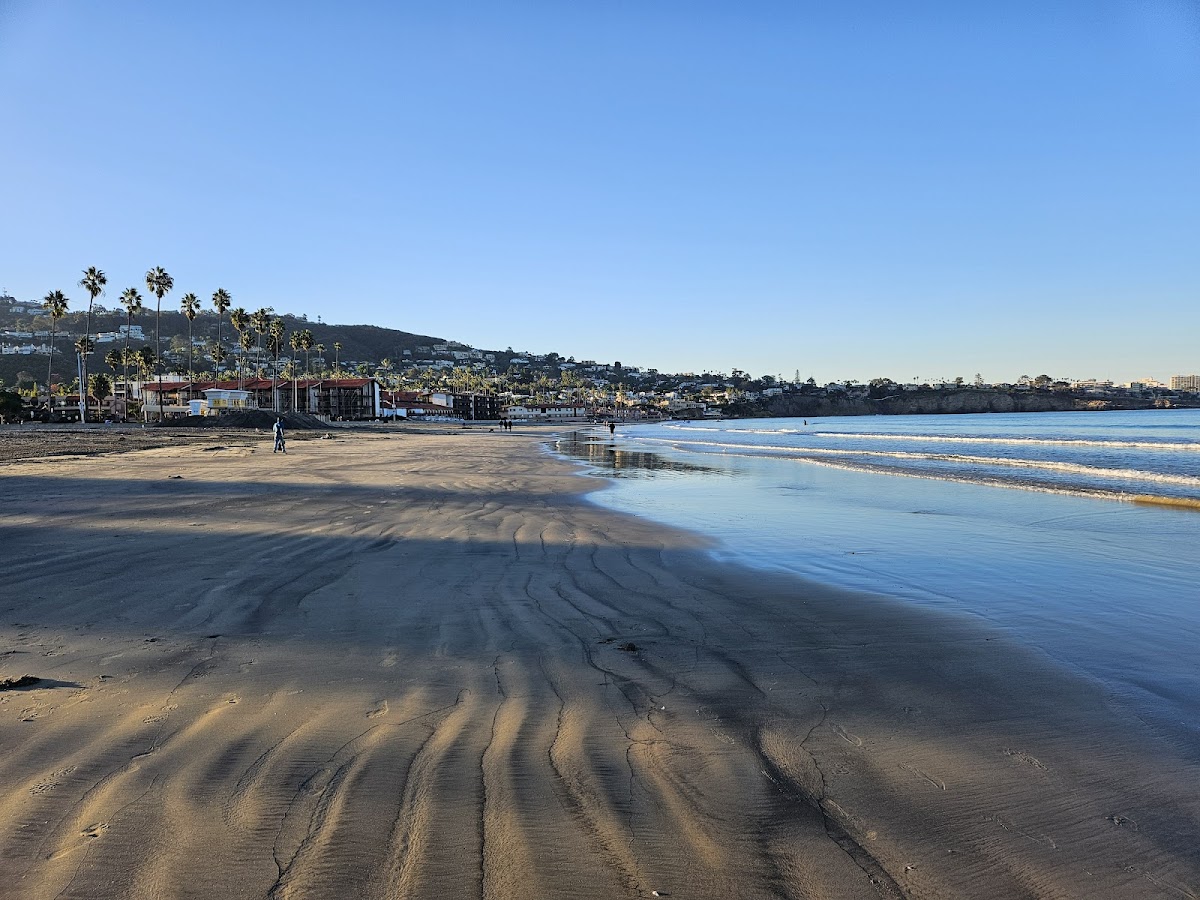
The best beach for swimming in San Diego is La Jolla Shores for most adults, and Mission Bay for families and beginners. Both have calm entries, lifeguard coverage, and warmer-than-average water — but the right pick depends on what kind of swimmer you are and who you’re bringing with you.
Quick Answer
- Calmest water for beginners and kids: Mission Bay — protected from ocean swells, no rip currents, warmest water in the city
- Best overall for swimming: La Jolla Shores — gentle slope, soft sand bottom, year-round lifeguards, minimal current
- Warmest ocean water: August–September, 66–72°F (18–22°C) — no wetsuit needed
- Year-round lifeguard coverage: Mission Beach, Pacific Beach, Ocean Beach, Coronado Beach, La Jolla Shores
- Avoid swimming within 72 hours of rain at urban beaches — water quality advisories apply automatically
- Do you need a wetsuit? Yes, outside of July–September — March water is currently ~59–62°F
Best Swimming Beaches in San Diego
La Jolla Shores wins for most adults. Mission Bay wins for families and kids. Coronado wins for calm open-ocean swimming with full facilities. Here’s the full breakdown by use case.
La Jolla Shores — Best Overall for Swimming
La Jolla Shores is the most consistently recommended beach for swimming in San Diego. The entry is gentle — a long, gradually sloping sandy bottom with minimal drop-off — which means you can wade out a long way before the water gets deep. Waves are typically small and well-spaced, nothing like the heavy shore break at Ocean Beach or even Pacific Beach.
Lifeguards are stationed here year-round, not just in summer. The beach sits at the northern end of La Jolla Cove, which creates a partial natural windbreak and keeps the water slightly warmer than the open coast.
The one caveat: La Jolla Shores gets crowded on summer weekends, particularly in the early afternoon. Arrive before 10 AM or after 4 PM to find space. Parking in the lot fills fast — the surrounding streets are the backup, and they fill too. See our free parking guide for San Diego for street-by-street options near La Jolla.
Exploring the wider area — restaurants, nearby parks, and local spots? Browse places to visit in La Jolla with maps and directions.
Best for: Adults, intermediate swimmers, snorkelers, families who want open-ocean feel without heavy waves.
Mission Bay — Best for Families and Beginners
Mission Bay is not the ocean — it’s a protected 4,200-acre aquatic park where the water is warmer, calmer, and genuinely safe for young children and non-swimmers. No ocean swells reach the bay. No rip currents. On a summer afternoon the water can hit 70–75°F in the shallower coves, noticeably warmer than any ocean beach.
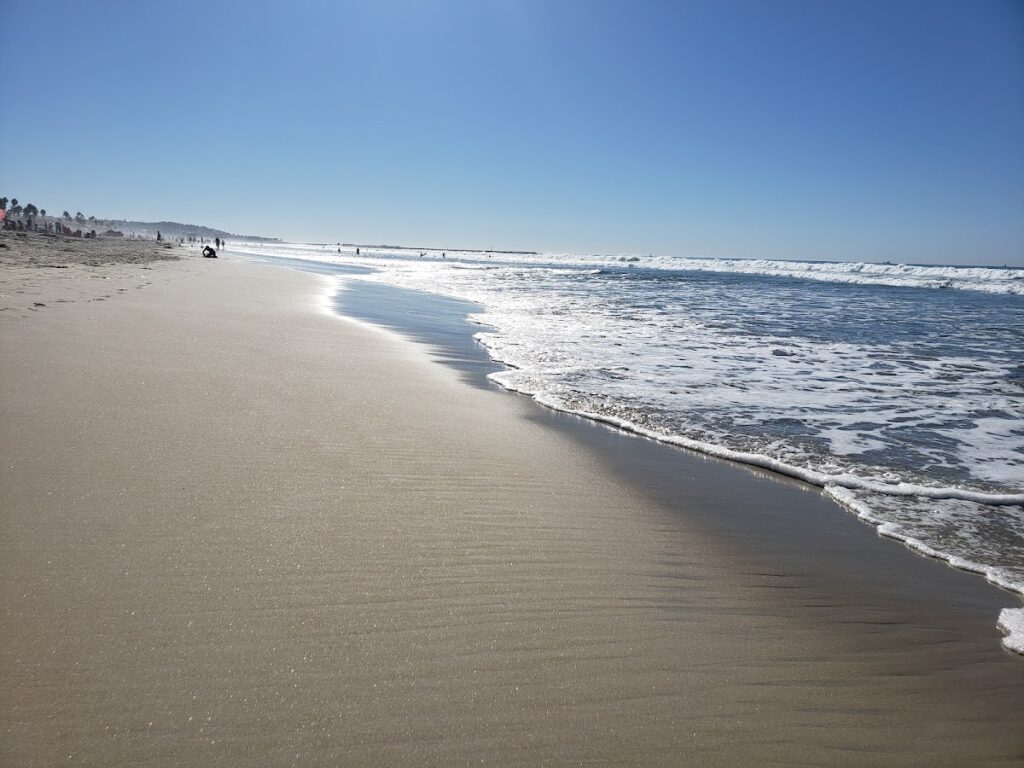
The best swimming areas within Mission Bay are Tecolote Shores, Fiesta Island, and the coves near De Anza Cove. All have gentle, sandy entries. Fiesta Island has almost no crowds midweek. The water visibility is lower than La Jolla — this is bay water, not open ocean — but for swimming and playing with kids, it’s unmatched in San Diego.
Restrooms, showers, playgrounds, and parking are widely available throughout the bay. The Mission Bay Aquatic Center also rents paddleboards, kayaks, and water bikes from the beach — useful if swimming alone isn’t enough to keep a group occupied.
Best for: Families with young children, beginners, non-swimmers, anyone who wants warm calm water.
Coronado Beach — Best for Open-Ocean Families
Coronado Beach is one of the widest beaches in Southern California — over 100 feet of flat sand at low tide — and the water entry is remarkably gentle for an open ocean beach. The offshore submarine canyon that runs near much of San Diego’s coast veers away from Coronado, which partially reduces rip current risk compared to beaches further north.
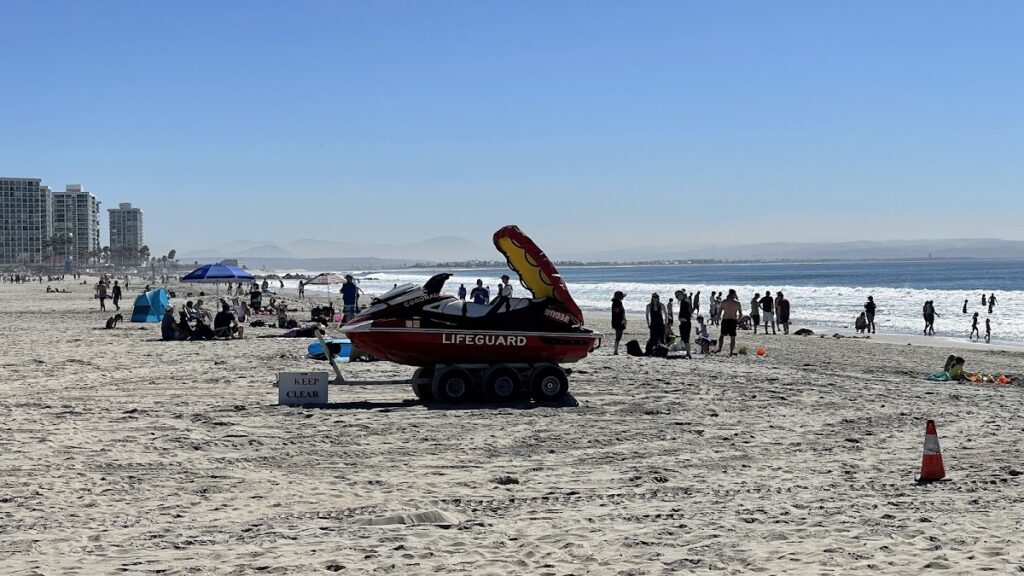
Lifeguards cover Coronado year-round. The beach is clean, well-maintained, and has full facilities including restrooms and showers near the Hotel del Coronado end. The water here runs slightly warmer than Mission Beach or Pacific Beach due to Coronado’s position relative to the bay outflow.
The tradeoff: getting to Coronado requires either the Coronado Bridge or the ferry from Downtown. It’s a 10-minute drive from Downtown once you’re on the island — the logistics keep some visitors away, which also means it’s quieter than Mission Beach on comparable weather days. The closest swimming beach to Downtown San Diego if you’re taking the ferry is Coronado — about 15 minutes door to water.
Best for: Families wanting open-ocean swimming with full facilities and calmer conditions than north San Diego beaches.
Pacific Beach and Mission Beach — Best for Active Swimmers
Pacific Beach and Mission Beach are the highest-energy swimming beaches in San Diego. Longer, more exposed stretches of open coastline mean more consistent wave action — good for bodysurfing and boogie boarding, less ideal for casual wading with small children.
Both have year-round lifeguard coverage from the San Diego Fire-Rescue Lifeguard Division, one of the most active beach patrol operations in California. The boardwalk runs the length of both beaches, which means parking, food, restrooms, and showers are everywhere. That said, parking here on summer weekends is genuinely difficult — our free parking guide covers the best free street options within walking distance of both beaches.
The rip current risk is real here, particularly at the northern end of Pacific Beach near Tourmaline Surf Park. If you’re not a confident swimmer, stay south of Crystal Pier where conditions are generally milder and lifeguard towers are closely spaced.
One thing most people don’t realize: Mission Beach between Belmont Park and the jetty has some of the most consistent swimming conditions on the strip — more protected by the jetty structure than the open sections further north.
Best for: Confident swimmers, teens, bodyboarders, anyone who wants the full boardwalk beach experience.
Ocean Beach — Best for Locals, Caution for Visitors
Ocean Beach has a loyal local following and genuinely beautiful sand, but it’s not the safest choice for inexperienced swimmers. The shore break is heavy, the rip currents are among the strongest of any San Diego beach, and the water runs colder than sheltered areas.
Lifeguards patrol Ocean Beach seasonally — reduced winter coverage compared to Mission Beach or Pacific Beach. The Dog Beach section at the north end is dog-friendly year-round, one of the few places in the city where dogs can enter the water.
If you’re a strong swimmer who knows how to identify and exit a rip current, Ocean Beach is excellent. If not — Mission Beach or La Jolla Shores is the better call.
Best for: Experienced swimmers, locals, surfers, dog owners.
La Jolla Cove — Best Beach for Snorkeling in San Diego
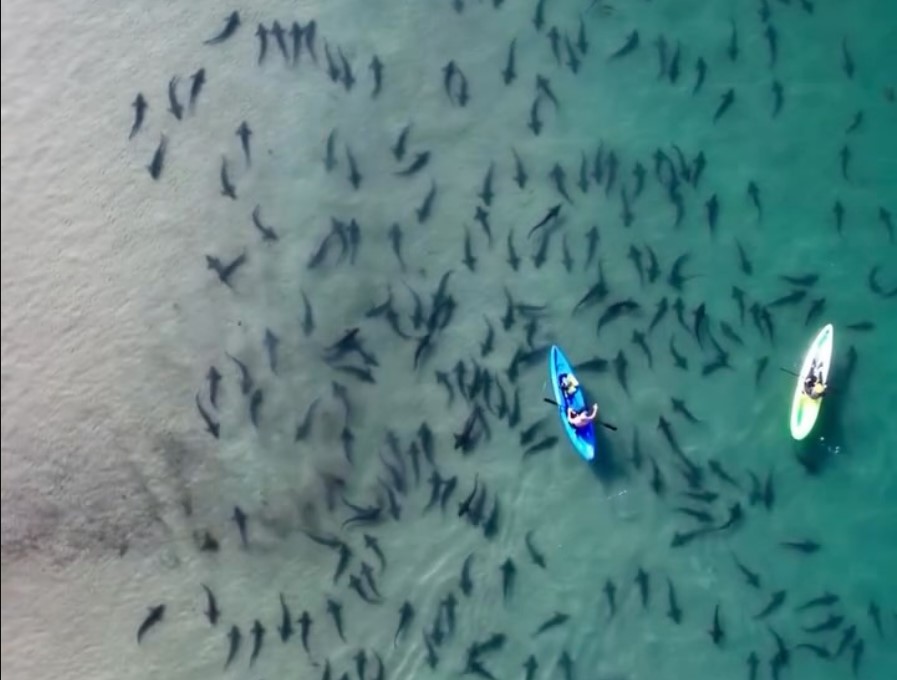
La Jolla Cove is protected as a marine reserve, which means the underwater life is exceptional — leopard sharks in summer, bright garibaldi fish, kelp forests, and sea lions underwater. It’s the best snorkeling spot in San Diego by a significant margin, and one of the best on the entire Southern California coast.
The swimming conditions are more nuanced than La Jolla Shores. The cove itself is small and sheltered, but entries and exits over rocks can be tricky, and surge can be significant at mid-to-high tide. Water clarity is excellent year-round.
The leopard sharks that aggregate here in summer (July–October) are completely harmless to humans — they feed on invertebrates and small fish — and swimming alongside them is one of the genuinely unique experiences in San Diego. Several local operators run guided leopard shark snorkel tours departing from La Jolla Shores, which is a more comfortable entry point than the cove rocks themselves.
Best for: Snorkelers, experienced swimmers, underwater photographers, anyone who wants to swim with leopard sharks.
Browse nearby restaurants, parking, and La Jolla area spots: La Jolla local directory.
San Diego Ocean Temperature by Month — When Can You Actually Swim?
San Diego ocean water averages 55–72°F (13–22°C) across the year — warm enough to swim comfortably without a wetsuit only in late summer. The California Current running south along the coast keeps temperatures colder than most visitors expect for a Southern California destination.
| Month | Ocean Temp | Wetsuit Needed? | Verdict |
|---|---|---|---|
| January | 55–58°F (13–14°C) | Full 4/3mm | Cold — casual swimming not comfortable |
| February | 55–59°F (13–15°C) | Full 4/3mm | Cold |
| March | 59–62°F (15–17°C) | 3/2mm recommended | Manageable with wetsuit |
| April | 59–63°F (15–17°C) | 3/2mm | Manageable |
| May | 61–65°F (16–18°C) | 3/2mm | Getting warmer |
| June | 63–67°F (17–19°C) | Optional springsuit | Comfortable for many |
| July | 66–70°F (19–21°C) | Not needed ✅ | Good swimming season |
| August | 69–72°F (21–22°C) | Not needed ✅ | Peak season |
| September | 68–72°F (20–22°C) | Not needed ✅ | Peak season |
| October | 64–68°F (18–20°C) | Optional springsuit | Still pleasant |
| November | 60–65°F (16–18°C) | 3/2mm recommended | Cooler |
| December | 57–61°F (14–16°C) | Full 4/3mm | Cold |
Mission Bay runs 3–5°F warmer than ocean beaches in summer due to shallower, enclosed water. La Jolla Cove and La Jolla Shores run 2–4°F warmer than Ocean Beach or Pacific Beach year-round.
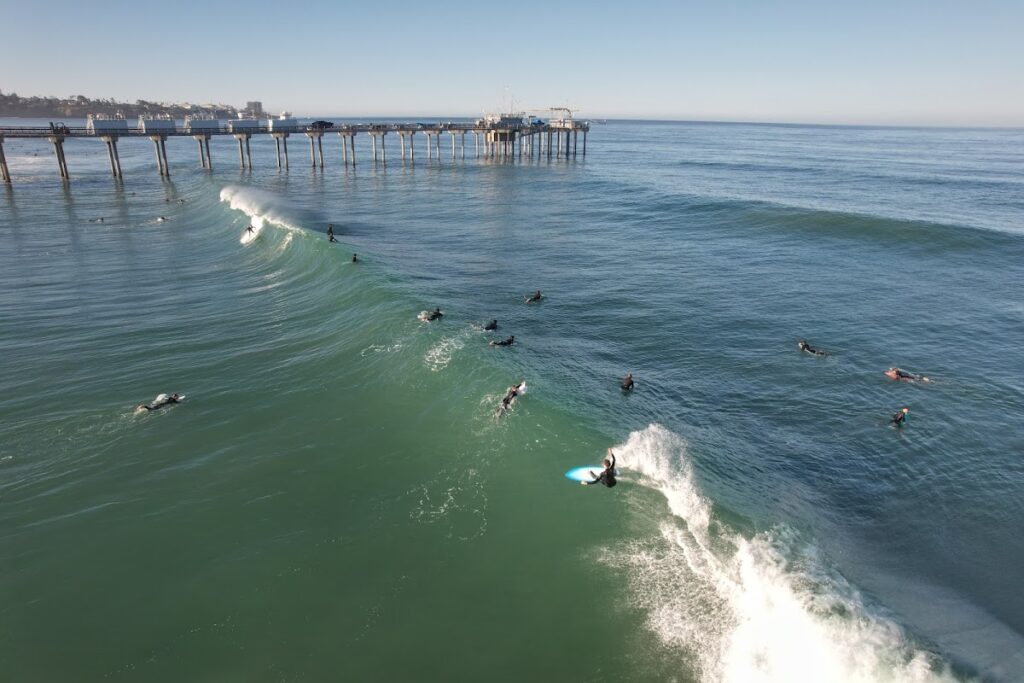
The honest answer on wetsuits: most San Diego locals surf in wetsuits year-round except August–September. If you’re visiting from out of state and not used to cold Pacific water, budget for a wetsuit rental from April through June and again in October. Most surf shops near the main beaches rent 3/2mm wetsuits for $15–25/day.
Lifeguard Coverage — What You Need to Know Before You Go
San Diego operates one of the largest municipal lifeguard programs in the United States, run by the San Diego Fire-Rescue Lifeguard Division. Coverage is not equal across all beaches, and the difference between year-round and seasonal patrol matters.
- Year-round daily coverage: Mission Beach, Pacific Beach, Ocean Beach, Coronado Beach, La Jolla Shores
- Seasonal coverage (Memorial Day – Labor Day): most other city beaches including Del Mar City Beach, Moonlight Beach (Encinitas), Carlsbad State Beach
- Limited or no permanent tower coverage: Sunset Cliffs, Windansea Beach, Black’s Beach
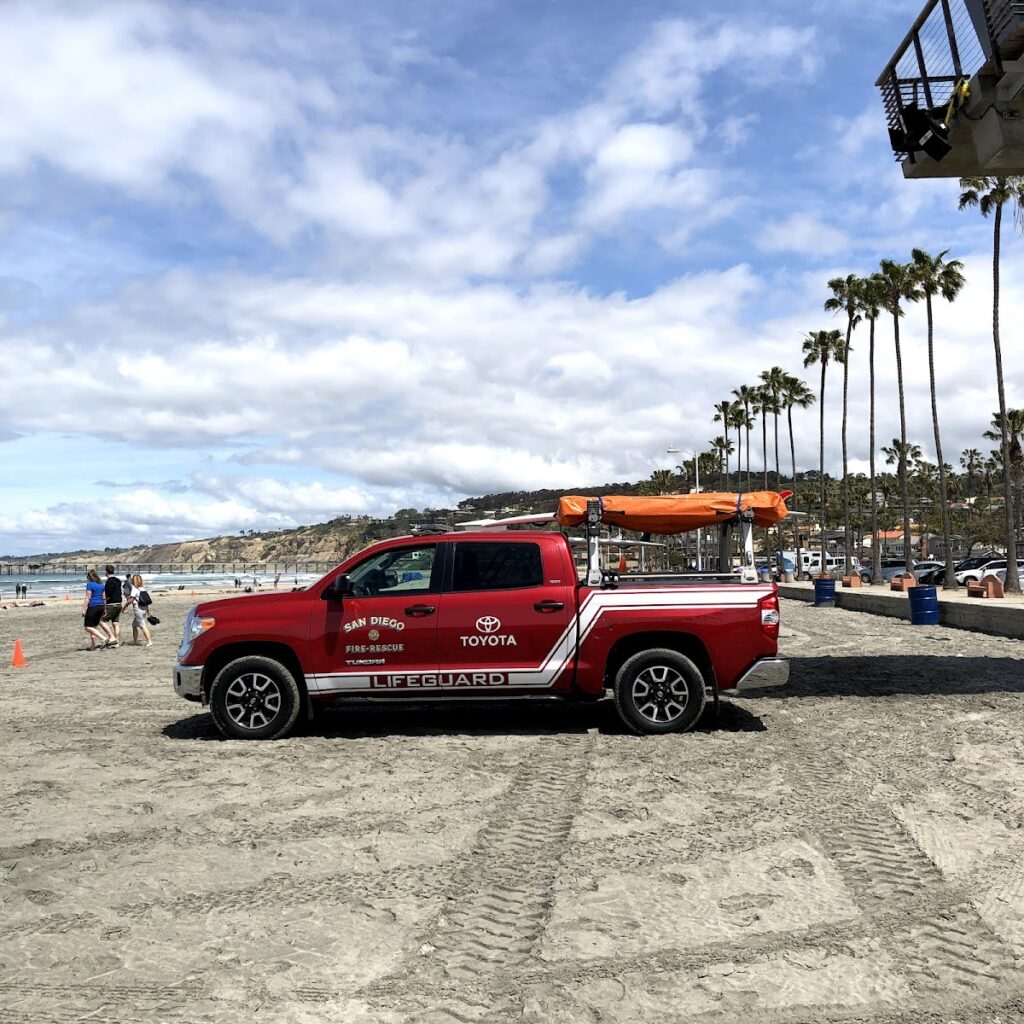
San Diego lifeguards also patrol by personal watercraft and truck along the entire coastline, even outside tower zones — response times are fast. But swimming in an unguarded stretch of coast is always higher risk than a staffed beach, particularly for unfamiliar visitors.
If you’re visiting with children or are not a confident ocean swimmer, stick to beaches with active towers: Mission Beach, Pacific Beach, La Jolla Shores, or Coronado. The San Diego Fire-Rescue Lifeguard Division publishes current tower staffing and water conditions daily.
Water Quality, Beach Advisories, and When Not to Swim
Swimming in San Diego is safe on most days — but not all of them. San Diego County automatically issues swimming advisories at urban beaches after rainfall exceeds 0.1 inches, and those advisories typically last 72 hours. Rain washes contaminants from streets and storm drains directly into the ocean at beach outfalls — the risk is real and the 72-hour window is not conservative.
The beaches most affected are those near storm drain outlets: Mission Beach near Belmont Park, Ocean Beach near the pier, and any beach adjacent to creek or river mouths. La Jolla Cove and La Jolla Shores are generally less affected because there are fewer urban drains in the immediate area.
Before any swim, check sdbeachinfo.com — current advisory status for every monitored beach in the county, updated daily.
Other conditions worth knowing before you go:
- Red tide / algae blooms: occasional in late summer, visible as red-brown water discoloration; not toxic in most cases but can cause minor skin irritation in sensitive individuals
- Jellyfish: periodic in late summer and fall; purple-flag warnings at lifeguard towers when present
- Shark activity: San Diego has an active white shark population offshore, particularly near La Jolla. Attacks are extremely rare and the area is heavily monitored by Shark Lab at CSULB. Avoid swimming at dawn, dusk, and near active fishing or sea lion colonies
Official Safety Guidelines for San Diego Beaches
The City of San Diego and California State Parks publish clear guidelines that apply across all city beaches:
- Swim near a lifeguard tower whenever one is present — the City of San Diego officially recommends this as the single most effective safety measure for beach swimmers
- Never swim alone — regardless of skill level or conditions
- Check conditions before entering — lifeguard towers display colored flags: green (safe), yellow (caution), red (dangerous), purple (marine life present)
- Rip current protocol: if caught in a rip current, do not swim directly against it toward shore — swim parallel to the beach until you’re clear of the current, then angle back in diagonally
- 72-hour rule after rain: San Diego County advises avoiding contact with ocean water at urban beaches for 72 hours following measurable rainfall
- Children in the ocean: the City recommends children remain within arm’s reach of a supervising adult at all times, regardless of apparent water depth
Rip Currents in San Diego — Where the Risk Is Highest
Rip currents account for the majority of lifeguard rescues at San Diego beaches every year. They form where water pushed shoreward by waves finds a channel to flow back out — typically at gaps in sandbars, near piers, or at rocky points.
Highest rip current risk in San Diego:
- Ocean Beach — particularly near the pier and the northern end
- Mission Beach — near the south jetty
- Pacific Beach — the northern stretch near Tourmaline Surf Park
- La Jolla — between the Cove and Children’s Pool, where coastline geometry creates strong lateral currents
Lowest rip current risk:
- Mission Bay — no rip currents at all (enclosed bay)
- La Jolla Shores — gentle slope disperses wave energy before it can form channels
- Coronado Beach — offshore canyon geometry reduces nearshore current formation
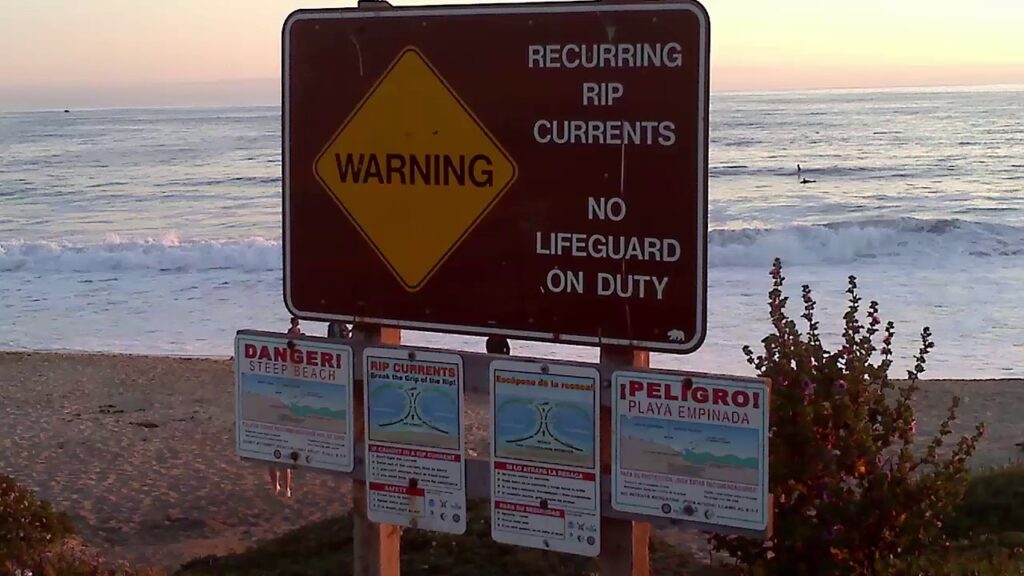
If you’re not a strong swimmer or are visiting with children, the rip current exposure at Ocean Beach and northern Pacific Beach is a genuine reason to choose a different location for the day.
San Diego’s Best Swimming Beaches — Side by Side
| Beach | Calm Water | Lifeguards | Family-Friendly | Water Temp | Crowds |
|---|---|---|---|---|---|
| Mission Bay | ⭐⭐⭐⭐⭐ | Seasonal | ⭐⭐⭐⭐⭐ | Warmest | Moderate |
| La Jolla Shores | ⭐⭐⭐⭐ | Year-round | ⭐⭐⭐⭐ | Above avg | High in summer |
| Coronado Beach | ⭐⭐⭐⭐ | Year-round | ⭐⭐⭐⭐ | Avg | Moderate |
| Pacific Beach | ⭐⭐⭐ | Year-round | ⭐⭐⭐ | Avg | Very high |
| Mission Beach | ⭐⭐⭐ | Year-round | ⭐⭐⭐ | Avg | Very high |
| Ocean Beach | ⭐⭐ | Seasonal | ⭐⭐ | Avg | Moderate |
| La Jolla Cove | ⭐⭐⭐ | Seasonal | ⭐⭐ | Above avg | High |
See all public beaches in San Diego with maps, photos, and directions: San Diego Public Beaches Directory.
What to Bring — Practical Checklist
Most visitors underpack for San Diego beaches in spring and overpack in summer. A few things that actually matter:
- Wetsuit or springsuit (April–June, October): rental shops near most beaches charge $15–25/day; buying a basic springsuit runs $60–100
- Rash guard: UV index in San Diego is high year-round — more effective than sunscreen alone for extended water time
- Water shoes: useful at La Jolla Cove and any rocky entry point
- Earplugs: cold Pacific water and swimmer’s ear are a reliable pairing for extended ocean swimming
- Parking plan: summer beach parking in San Diego is genuinely competitive — our free parking guide covers the best free street spots within walking distance of Mission Beach, Pacific Beach, and La Jolla
A Note on Sources and Conditions
Water temperature data reflects historical monthly averages from NOAA tide station records and current-season readings — actual daily conditions vary. For today’s ocean temperature, check seatemperature.info. Lifeguard coverage schedules are published by the San Diego Fire-Rescue Lifeguard Division and subject to seasonal change without notice. Beach water quality advisories are issued by San Diego County Environmental Health — always verify current status at sdbeachinfo.com before swimming, particularly after rainfall. This article does not constitute safety advice; individual swimming ability and real-time conditions should always govern your decision to enter the water.
FAQ
What is the best beach for swimming in San Diego?
La Jolla Shores is the strongest all-around choice — gentle slope, year-round lifeguards, minimal rip current risk, and slightly warmer water than the open coast. For families with young children, Mission Bay is better: fully protected from ocean swells with the warmest water in the city.
What is the easiest beach to swim in San Diego for beginners?
Mission Bay is the easiest — it’s a protected inland bay with no waves, no rip currents, and water that reaches 70–75°F in summer. For beginners who want open-ocean experience, La Jolla Shores is the next safest option with its gentle entry and year-round lifeguards.
What is the closest swimming beach to Downtown San Diego?
Coronado Beach is 10 minutes from Downtown by car via the Coronado Bridge, or accessible by ferry from the Broadway Pier — about 15 minutes total. Mission Beach is 15 minutes north by car. Both have year-round lifeguard coverage and full facilities.
What is the water temperature in San Diego right now?
In March, San Diego ocean water averages 59–62°F (15–17°C). A 3/2mm wetsuit makes it comfortable for most people. The warmest window for wetsuit-free swimming is July–September when temperatures hit 66–72°F (18–22°C). Mission Bay runs 3–5°F warmer than ocean beaches in summer.
Do you need a wetsuit to swim in San Diego?
Outside of July–September, yes — most visitors find the water too cold for extended swimming without one. Full wetsuits are recommended December through March. Springsuits or 3/2mm wetsuits work for April–June and October. August and September are the only months most people swim comfortably without any wetsuit.
Which San Diego beaches have lifeguards year-round?
Mission Beach, Pacific Beach, Ocean Beach, Coronado Beach, and La Jolla Shores all have year-round lifeguard coverage from the San Diego Fire-Rescue Lifeguard Division. Most other San Diego beaches operate seasonal patrol from Memorial Day through Labor Day only.
Is it safe to swim in San Diego after it rains?
No — San Diego County issues automatic swimming advisories at urban beaches for 72 hours after rainfall exceeding 0.1 inches due to stormwater runoff entering the ocean. Check sdbeachinfo.com for current advisory status before any post-rain swim.
What is the best beach in San Diego for kids?
Mission Bay is the top pick for young children — protected, warm, calm water with no waves or rip currents. For families who want an open-ocean beach with full facilities and year-round lifeguards, Coronado Beach and La Jolla Shores are the strongest options.
Ready to plan the full day? Our complete guide to San Diego beaches covers every beach in the city — surf spots, dog-friendly options, tide pools, and the best time to visit each one. And if you’re staying into the evening, see what time sunset falls in San Diego this month — because La Jolla Shores at golden hour is a different experience entirely.