
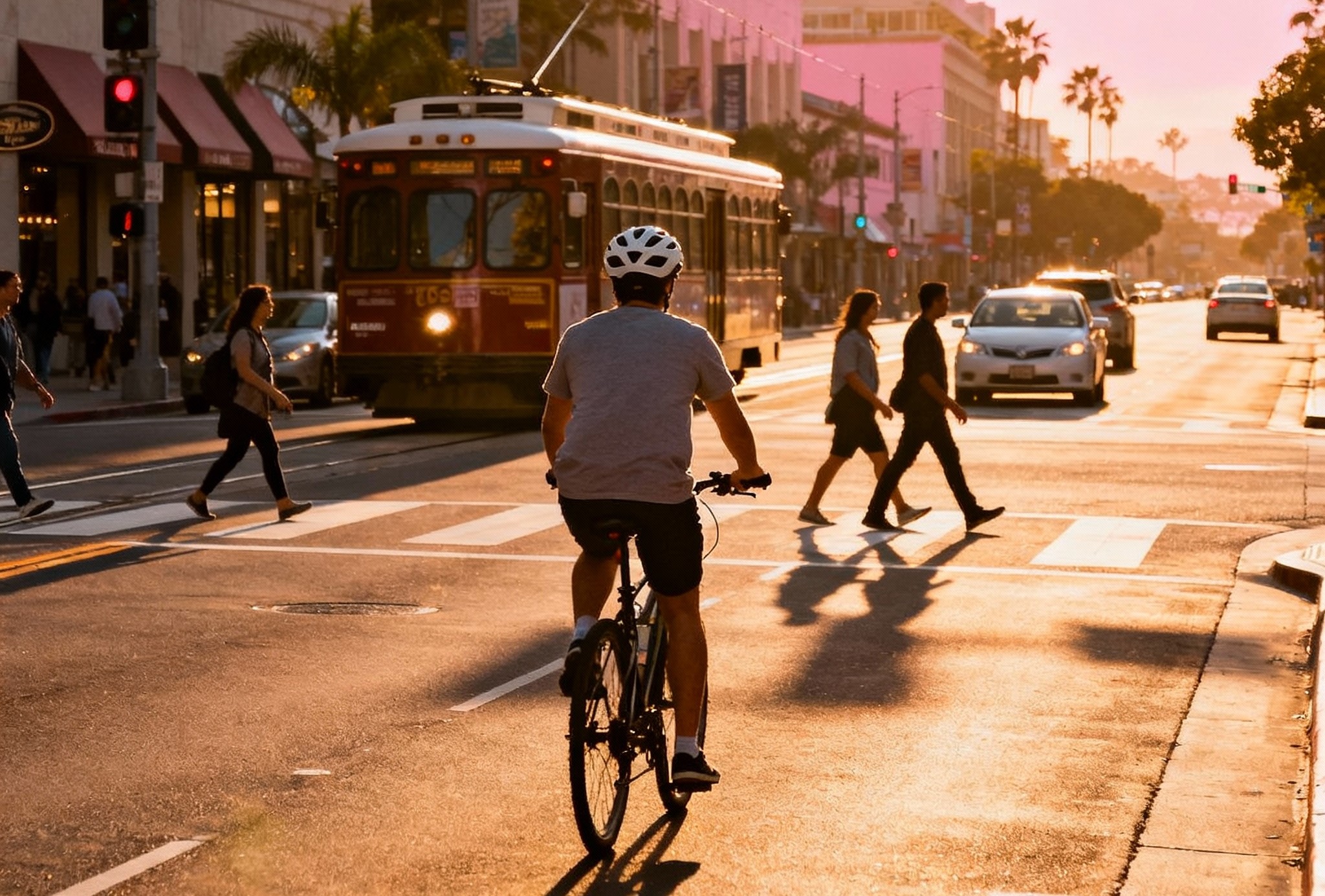
San Diego claims to have one of America’s shortest commutes at 26 minutes, but downtown living tells a completely different story. While suburban San Diego commuters enjoy relatively quick drives, downtown residents face public transit times of 49 minutes versus 26 minutes by car, parking costs that hit $10 per hour during events, and car insurance averaging $1,900 annually. Understanding the true costs and time investments of each transportation option—car, transit, bike, and walking—determines whether downtown San Diego living works for your budget and lifestyle, especially when hidden expenses like credit card fees on parking meters and emergency late-night rideshares significantly impact your monthly transportation costs.
Look, I’ve been living downtown for three years now, and let me tell you something nobody mentions in those glossy “move to San Diego” guides: the commute situation is messy. Really messy.
When I first moved here from Phoenix, I thought I’d ditch my car and embrace that California transit lifestyle. Boom—reality check hit hard on day one when my 15-minute drive to work became a 45-minute trolley adventure. But here’s the thing: I’ve figured out what actually works and what’s just expensive wishful thinking.
The Real Numbers: Car vs Transit vs Bike vs Walking
Car Commuting: The Hidden Money Drain
Here’s what shocked me most about owning a car downtown. It’s not just the obvious stuff.
Real Travel Times (I’ve timed these personally):
- Downtown to UCSD: 26 minutes by car vs 45+ minutes on the Blue Line
- Downtown to Airport: 10 minutes driving vs 30+ minutes with transit transfers
- Downtown to Mission Valley: 15 minutes car vs 22 minutes on Green Line trolley
The Mission Valley route? That’s actually where transit wins. Everything else? Not so much.
September 2025 Parking Reality:
- Regular downtown meters: $2.50/hour from 8am-8pm, including Sundays (yep, they changed that)
- Event parking: $10/hour for 6-hour windows on 100+ days per year
- Monthly garage parking: $150-300/month if you can find a spot
- That sneaky 3% credit card fee on all meter payments
I learned about that credit card fee the hard way when my monthly parking bill hit $312 instead of $300. Three percent doesn’t sound like much until you multiply it across a year.
That’s actually when I started seriously looking for free parking alternatives. I found this comprehensive San Diego free parking map after months of trial and error—it’s saved me hundreds in fees since then.
Annual Car Costs (Real Numbers):
- Insurance: $1,900/year average (I pay $1,765 with a clean record)
- Parking: $3,600/year for daily commuters
- Gas + maintenance: ~$2,000/year
- Total: ~$7,500/year just to own a car downtown
Yeah, that number made me queasy too.
MTS Transit: What Actually Works (And What Drives You Crazy)
The trolley system has its moments. The Blue Line runs every 7.5 minutes during rush hour—that’s actually pretty good. Orange and Green Lines? Every 15 minutes, which means you’re checking your phone constantly.
Real Commute Times from Downtown:
- To UCSD: 45+ minutes on Blue Line (I’ve done this commute—bring a book)
- To Mission Valley: 22 minutes on Green Line (honestly not bad)
- To El Cajon: 35+ minutes on Orange Line
- To Airport: No direct connection, 45+ minutes with transfers (just take an Uber)
The new overnight Express Bus 910 runs midnight to 5am, which is great if you work late shifts. But here’s the kicker: there’s NO service from 2am to 4am. Found that out the hard way after a late night in Gaslamp.
Annual Transit Costs:
- Monthly Pass: $72/month = $864/year
- Day Pass: $6 (adds up fast if you’re not regular)
The Pronto App? Don’t get me started. Half the time the scanner doesn’t work, and their customer service is… let’s just say patience is required.
Biking: The Underrated (But Risky) Option
San Diego gets a Bronze rating for bike-friendliness, which sounds better than it feels on the street. We had 16 cyclist deaths in the county in 2021—that stat hits different when you’re actually on two wheels.
Routes I’ve learned to avoid:
- University Avenue (especially City Heights to Hillcrest stretch)
- Pacific Highway from Old Town to Downtown
- El Cajon Boulevard (just no)
- Imperial Avenue and Friars Road
Safe routes that actually work:
- Harborfront bike path (gorgeous but limited destinations)
- Protected bike lanes in Little Italy (my neighborhood—love these)
First-year costs:
- Decent commuter bike: $500-1,500 (I went mid-range at $800)
- Safety gear: $200 (don’t cheap out on the helmet)
- Maintenance: $200/year
- Total first year: ~$1,000, then $200 annually
The math works if you stick with it. Big if.
The Hidden Expense Breakdown Nobody Talks About
Car Owner Reality Check
Monthly Car Costs Downtown:
• Insurance: $158/month
• Parking: $300/month (garage) OR $150/month (street + tickets)
• Gas: $120/month
• Maintenance: $75/month
• Registration/fees: $25/month
TOTAL: $678-728/month = $8,136-8,736/year
That street parking option? I tried it for six months. Between tickets, stress, and circling blocks looking for spots, the garage became worth every penny.
If you’re determined to avoid garage costs, check our comprehensive free parking options guide that covers 38+ locations across downtown, Old Town, Mission Bay, and transit centers—complete with time restrictions and insider tips for each spot.
Transit User Costs
Monthly Transit + Backup Costs:
• MTS Monthly Pass: $72/month
• Rideshare backup: $80/month average
• Bike share/scooter: $30/month
TOTAL: $182/month = $2,184/year
Hidden transit costs that got me:
- Late night Uber/Lyft when transit stops: $25+ per trip
- Weekend events requiring car rental: $200+ per weekend
- Emergency transportation when trolley breaks down
See, that backup rideshare cost is real. You can’t rely 100% on transit in San Diego—I learned that during a trolley breakdown that left me stranded in Mission Valley at 10pm.
Safety Considerations by Time of Day
Here’s what three years of downtown living taught me about getting around safely:
Morning Rush (6-9am)
Car: Traffic sucks on I-5 and I-8, but parking downtown fills up by 8am. Transit: Crowded trolleys, but reliable schedule. Bike: Cool weather, moderate traffic, good visibility—honestly my favorite time to ride. Walking: Safe, busy streets, good lighting. Perfect for short distances.
Evening Return (5-8pm)
Car: Heavy traffic, plus those event parking surges kick in without warning. Transit: Crowded but reliable until 11:30pm. Bike: Rush hour traffic gets sketchy, and light starts fading. Walking: Generally safe in busy areas like Gaslamp and Little Italy.
Late Night (8pm-2am)
Car: Expensive event parking, plus drunk drivers on weekend nights. Transit: Limited service, and honestly? The Green Line gets weird after 9pm. Bike: Poor visibility, impaired drivers—I don’t recommend it. Walking: Stick to Gaslamp and Little Italy. Avoid East Village solo after dark.
I learned that East Village lesson firsthand. Nothing terrible happened, but the vibe shifts significantly after 10pm.
Early Morning (2-6am)
Car: Free street parking, minimal traffic, but car break-ins are possible. Transit: NO SERVICE 2-4am. Bus 910 starts at 5am. Bike: Safest traffic-wise, but personal safety concerns. Walking: Not recommended solo. Just don’t.
Neighborhood-Specific Real Talk
Living in Little Italy
Best option: Walking + occasional transit
This is where I live, and honestly? It’s the sweet spot. Walkable to most downtown destinations, safe at night, decent bike infrastructure. I walk to work, walk to groceries, walk to dinner. The farmer’s market on Saturdays is right outside my door.
Living in East Village
Best option: Transit + rideshare backup
Great trolley access, walkable to Petco Park for games, but those late-night safety concerns are real. My friend lives here and always Ubers home after dark.
Living in Gaslamp
Best option: Walking + rideshare
Central location, but parking is brutally expensive and tourist crowds get old fast. My coworker lived here for a year—loved the convenience, hated the noise.
The Real Math: What Actually Works
After three years of trial and error, here’s what I’ve learned works for different situations:
Heavy commuter: Transit pass + bike backup = $2,500/year Occasional commuter: Rideshare + walking = $1,500-2,000/year
No choice car owner: Look for neighborhoods with included parking
Most cost-effective combo I’ve found? Transit pass for regular commutes, bike for short trips, walking for daily errands, and strategic rideshare for late nights and emergencies. For detailed information about optimizing each mode of transportation, including trolley routes, walking distances between neighborhoods, and multimodal planning, check our complete guide to trolley and walking tips for downtown San Diego.
Bottom Line Reality Check
Downtown San Diego living without a car is totally possible, but it requires planning and realistic expectations. Car ownership downtown will cost you $8,000+ annually. That smart combination of biking, transit, and walking? That’s your best balance of cost and flexibility.
The thing is, it’s not just about money. It’s about lifestyle. Some days I love hopping on the trolley with a coffee and a book. Other days I miss the freedom of just getting in a car and going wherever, whenever.
But here’s what I know for sure: that $8,000 I’m not spending on car ownership? That’s rent money. Vacation money. Investment money. And honestly? Walking to my favorite coffee shop in Little Italy every morning instead of sitting in traffic?
That’s worth something too.