
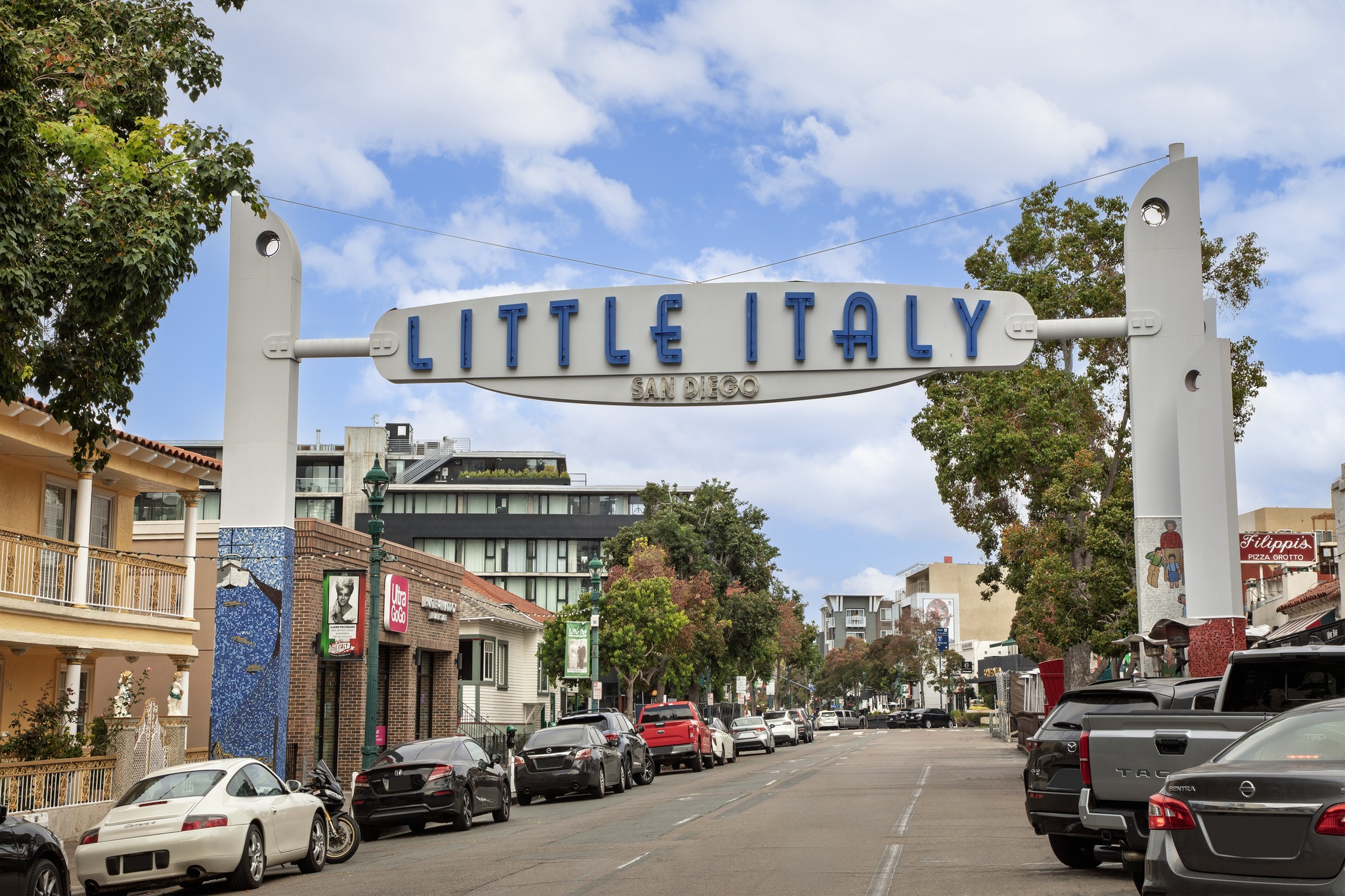
Little Italy is one of the best neighborhoods in San Diego for food, walkability, and all-day atmosphere. If you want one area that works for brunch, dinner, casual exploring, local events, and easy downtown access, this is the neighborhood that makes the most sense in 2026.
Quick Answer
- Little Italy sits just north of Downtown San Diego, between the waterfront and the city core.
- It is best known for restaurants, café patios, Piazza della Famiglia, and the Little Italy Mercato held every Saturday from 8:00 a.m. to 2:00 p.m.
- It works especially well for couples, weekend visitors, food-focused travelers, and people who want to explore on foot.
- Saturday morning gives you the fullest neighborhood experience, but weekday afternoons are easier for parking and restaurant access.
- If you are driving, expect paid garages, valet options, and heavier demand during peak dining hours and event days.
- For a broader city plan, Little Italy pairs well with the waterfront, the Embarcadero, and the rest of downtown San Diego.
Why Little Italy Stands Out
Little Italy stands out because it combines real neighborhood life with one of the strongest food scenes in San Diego. It is compact, highly walkable, and active from morning coffee through late dinner, which makes it more useful than many neighborhoods that only come alive during one part of the day.
That is the part many first-time visitors underestimate. Little Italy is not just a row of restaurants with good branding. It feels like a functioning district where people live, shop, walk dogs, meet friends in the piazza, and build their routines around the same streets visitors come to explore.
The result is a place that feels polished without feeling artificial. Some urban dining areas get repetitive fast. Little Italy usually does not. The rhythm changes throughout the day, and that gives it staying power. Morning feels calm and local. Lunch brings movement. Dinner turns the whole district into one of downtown’s most attractive places to be.
And here is where it gets interesting. The neighborhood works even if you arrive without a strict plan. That matters for modern visitors because many people are not looking for a checklist. They want a place that will reliably give them a good few hours.
Where Little Italy Is
Little Italy is located just north of Downtown San Diego and is bounded by Laurel Street to the north, Front Street to the east, Ash Street to the south, and San Diego Bay to the west. That location is a major reason the neighborhood performs so well for both visitors and residents.
You are close to the waterfront, close to downtown hotels, and close to several other parts of central San Diego that people usually want to combine in the same trip. Instead of building a whole day around driving from one zone to another, you can use Little Italy as a low-friction base.
That convenience changes the experience in a practical way. If you stay downtown, you can usually walk here. If you land at the airport, the transfer is short. If you want to stack brunch, harbor views, shopping, and dinner into one day, this neighborhood makes that easy.
A lot of San Diego trip planning gets overly spread out. Little Italy helps solve that. It gives you a concentrated version of what many people actually want from the city: great food, strong atmosphere, a little style, and enough nearby activity to keep the day moving.
A Short History That Explains the Neighborhood
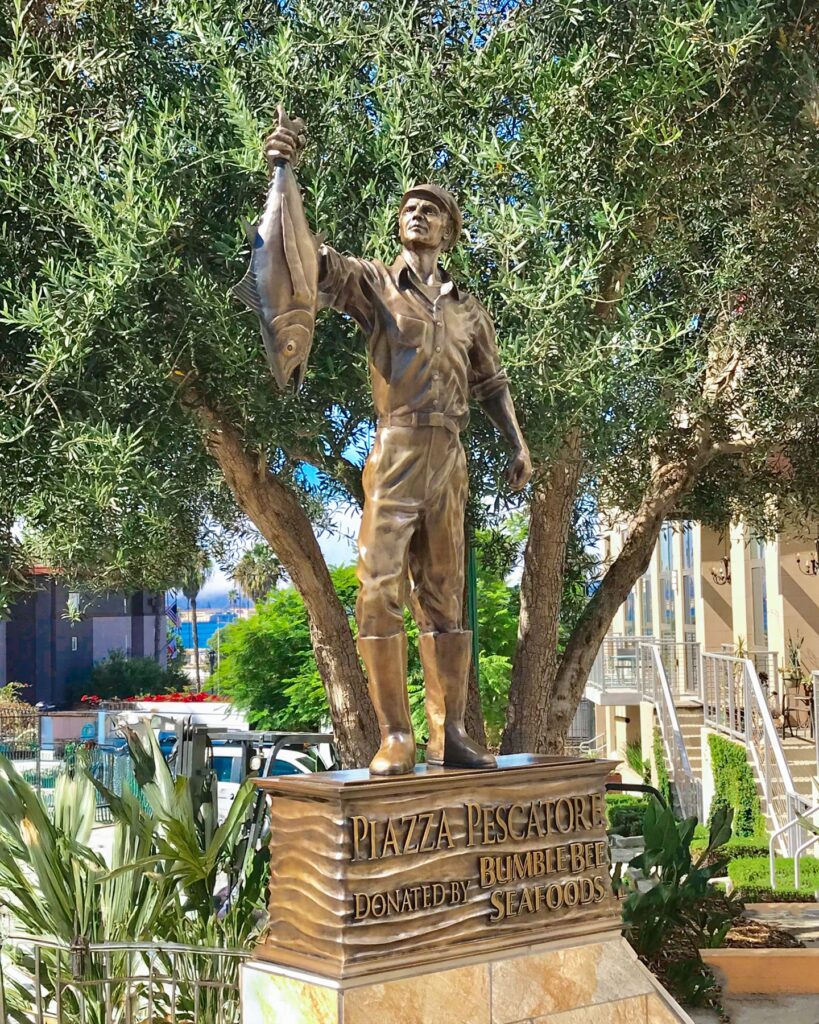
Little Italy began as a working waterfront community shaped by Italian immigrant families, many of whom came in the early 1900s and helped build San Diego’s tuna fishing industry. At one point, more than 6,000 Italian families lived in the area, and Little Italy became downtown San Diego’s oldest continuous neighborhood business district.
That history is not just background detail. It explains why the neighborhood still feels different from places that were built recently as lifestyle districts. The bones of the area come from an actual community, not a master-planned retail concept.
The neighborhood also went through a long period of decline. The collapse of the tuna industry on the West Coast hurt the local economy, and Interstate 5 cut through the area, displacing families and breaking up part of the old neighborhood fabric. Freeway construction separated a significant portion of the district and disrupted the Italian-American community that had built it.
Then the recovery started. In the 1990s, local property owners and family-run businesses pushed for revitalization, and the Little Italy Association became the central force behind beautification, programming, and neighborhood identity. That is one reason the district feels unusually coherent today. The growth was guided, not random.
What to Do in Little Italy
Little Italy is best explored on foot, with a mix of eating, wandering, and letting the neighborhood reveal itself block by block. The smartest plan is not to over-structure the visit. Start with one anchor, then build outward.
Walk India Street and Kettner Boulevard
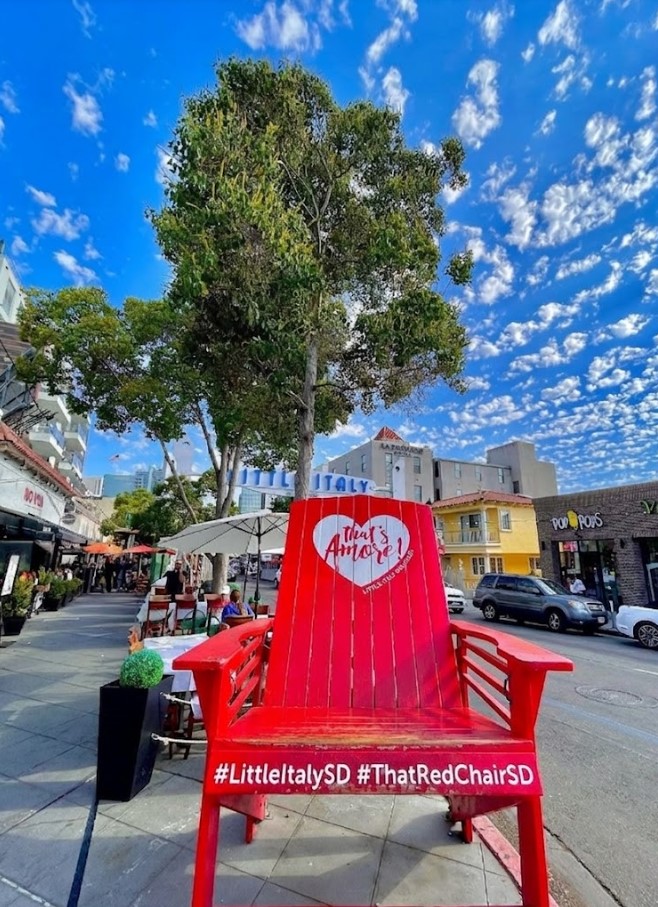
These are the two main corridors that shape most first impressions. India Street leans more classic and familiar, with Italian restaurants, delis, dessert stops, and that older neighborhood energy people usually expect from the name. Kettner Boulevard feels more modern, design-forward, and upscale.
Walking both gives you a fuller read on the district. If you only stay on one side, you end up seeing just half of what makes Little Italy work. One side tells the heritage story. The other shows the neighborhood’s reinvention.
Spend Time at Piazza della Famiglia
Piazza della Famiglia is the neighborhood’s central gathering place and one of the clearest reasons Little Italy feels more livable than a standard dining strip. It is described as the central gathering point of the area, and that is exactly how it functions.
It gives the neighborhood breathing room. People meet there before dinner, pause there in the afternoon, and use it as a midpoint while walking between restaurants and shops. On busier days, it becomes a social stage. On quieter mornings, it feels almost European in pace. Not forced. Just open, comfortable, and easy to settle into.
Visit the Little Italy Mercato
The Mercato is one of the biggest reasons to come on a Saturday. It runs every Saturday from 8:00 a.m. to 2:00 p.m., year-round and rain or shine, spreading across several blocks and filling the neighborhood with produce, ready-made foods, flowers, crafts, and local vendors.
This is not the kind of market that exists only for visitors. That is why it works. Locals actually use it, which changes the feel of the whole neighborhood. You get a stronger sense of daily life and less of a curated travel-only experience.
A smaller midweek version also exists on Wednesdays, but Saturday is the one that turns Little Italy into its fullest version of itself. If you want the neighborhood at maximum energy, this is the time.
Add the Waterfront
Little Italy connects naturally to the bay side of downtown, which makes it easy to combine with a harbor walk or time near Waterfront Park. That extra open space changes the pacing of the visit in a good way, especially if you have already spent a couple of hours eating, shopping, or moving through crowds.
That is one of the quiet strengths of this neighborhood. It does not trap you in a few busy blocks. You can shift from restaurant density to open-air waterfront views in a short walk, and that makes a half-day itinerary feel much more balanced.
For a wider city itinerary, our guide to things to do in San Diego in 2026 helps connect Little Italy with the rest of the city.
Where to Eat
Little Italy is one of the strongest restaurant neighborhoods in San Diego because it offers both density and variety. You can come here for a casual deli lunch, a polished date-night dinner, bakery hopping, wine, cocktails, or a long patio meal that turns into the rest of your evening.
The biggest misconception is that the area is only about traditional Italian food. Italian restaurants are central to its identity, yes, but the dining scene goes much wider than that. You will also find steakhouse-style dining, contemporary California menus, upscale cocktail-led rooms, and a strong café culture.
Here is the simplest way to think about the food landscape:
| Dining style | Best for | What it feels like |
|---|---|---|
| Classic Italian spots | First-time visitors, family meals, familiar comfort | Casual, rooted in neighborhood tradition |
| Modern upscale restaurants | Date nights, celebrations, higher-spend meals | Design-led, reservation-driven, more polished |
| Cafés and bakeries | Morning visits, lighter meals, slower pacing | Easy, walk-in friendly, good for layering into a longer day |
| Cocktail-forward restaurants | Evening plans, groups, social dining | Livelier rooms, stronger transition into nightlife |
The best approach is usually to mix styles. Have something casual earlier in the day, then commit to a stronger dinner reservation later. That gives the neighborhood more texture and helps avoid the common mistake of experiencing Little Italy only through one expensive table.
Another thing worth noting: some of the most memorable stops are not always the most hyped ones. Delis, bakeries, and neighborhood staples often tell you more about the district than its flashiest dining rooms.
Is Little Italy Good for Nightlife?
Little Italy is good for nightlife if your idea of nightlife starts with dinner, drinks, and a neighborhood that still feels alive after dark. It is less about clubs and more about stylish evenings, cocktail spots, wine bars, and restaurants that carry the energy well into the night.
That distinction matters because people often search with broad nightlife intent while actually wanting different outcomes. Some want loud and late. Others want walkable, social, and attractive without turning the night into a full downtown club circuit. Little Italy fits the second version better.
A typical evening here starts with dinner and then branches. You can stay local and keep things relaxed, or you can use Little Italy as the start of the night before heading deeper into downtown. That flexibility is a real advantage.
If you want to extend the evening, pair this neighborhood with our Downtown San Diego nightlife guide or the full late-night San Diego guide. Little Italy often works best as the elegant first half of the night.
Events That Matter in 2026
Little Italy stays relevant because it has a real event rhythm, not just occasional spike weekends. The weekly Mercato is the recurring anchor, and the neighborhood calendar also includes Mission Federal ArtWalk in spring, Taste of Little Italy in summer, and the Feast of San Gennaro in the fall.
That matters because many people looking up Little Italy are not only asking what there is to do. They are also asking when to go. Events answer that question better than generic attraction lists.
The neighborhood works especially well during food-centered weekends, art programming, and seasonal cultural events. Those moments make the district feel more than scenic. They make it feel active in a way that rewards repeat visits.
If you are planning around an event, check close to your travel date. Festival logistics, street closures, parking demand, and operating hours can shift quickly in downtown San Diego.
Parking and Getting Around
Little Italy is easy to walk once you are there, but parking strategy affects the whole experience. If you drive in without thinking about timing, you can spend more energy on logistics than the neighborhood deserves.
The good news is that there are multiple paid parking options. Self-parking garages are spread through the district, including the County of San Diego Parking Structure at 1536 Kettner Boulevard and the Piazza della Famiglia underground garage, where rates vary by duration. Valet parking also operates daily from 5:30 p.m. at different neighborhood intersections, with broader availability later in the week.
Here is the quick read:
- Saturday mornings are the hardest for parking because of the Mercato.
- Dinner hours increase pressure near the busiest restaurant blocks.
- Weekday lunches are usually the easiest driving window.
- Rideshare is often the lowest-friction option for evening visits.
- Transit works well if you are coming from other central San Diego locations — the MTS Trolley connects to Little Italy for $2.50 per trip.
Arriving 30 to 45 minutes earlier than planned can change the entire tone of the visit on busy days.
For a wider cost breakdown, see our Downtown San Diego parking guide.
Staying in Little Italy
Little Italy is one of the best places to stay in San Diego if you want an urban trip centered on dining, walkability, and easy downtown movement. It is especially strong for couples, solo travelers, and short city stays where convenience matters more than beach access.
This is where the neighborhood becomes more than a dinner district. If you stay here, your morning coffee, brunch, dinner plans, drinks, and casual exploring can all happen within a small radius. That reduces decision fatigue and makes the whole trip feel smoother.
The tradeoff is simple. Little Italy is not a beach neighborhood. If the goal is oceanfront relaxation, another base may fit better. But if the goal is a stylish city stay with strong food and real walkability, Little Italy is one of the smartest choices in San Diego.
Living in Little Italy
Little Italy is one of the strongest downtown San Diego neighborhoods for people who want an urban lifestyle built around access, walkability, and daily convenience. It has a residential population of about 3,000, and its modern identity blends apartment and condo living with an unusually active street-level neighborhood culture.
That combination is why the area appeals to more than tourists. Residents are not just buying proximity to restaurants. They are buying a routine: coffee on foot, dinner without driving, quick access to downtown, and a neighborhood that still feels active on ordinary weekdays.
Of course, the tradeoff is urban density. Noise can be part of the experience near the busiest corridors, and housing comes at a premium compared with many non-downtown areas. But for the right person, that is exactly the point. You are not moving here for quiet distance. You are moving here to be in the middle of things.
What Official Sources Say
Official city, tourism, and neighborhood sources present Little Italy as a historic, mixed-use, pedestrian-friendly district with strong cultural identity and regular public programming. Their framing is consistent, which is useful when separating genuine neighborhood quality from promotional language.
- The City of San Diego defines Little Italy with formal neighborhood boundaries and ties its identity to the early Italian families who helped build the local tuna fishing industry.
- Official tourism guidance highlights the district’s patio cafés, restaurants, pubs, galleries, shops, hotels, and Piazza della Famiglia as core visitor draws.
- The Little Italy Association positions itself as the organization overseeing revitalization, beautification, and neighborhood management.
- Historical sources describe Little Italy as downtown San Diego’s oldest continuous neighborhood business district.
- The Mercato is officially classified as a year-round, recurring neighborhood feature, not a temporary seasonal attraction.
This more formal view matches the on-the-ground experience well. Little Italy is not being sold as one thing and operating as another. That consistency is part of why the neighborhood holds up for both first-time visitors and repeat locals.
Editorial Note Before You Go
This guide is based on current official neighborhood, city, and tourism information available in June 2026, combined with how Little Italy functions as a real downtown district today. Event dates, parking rates, restaurant hours, and access conditions can change, especially around holidays, festivals, and special-event weekends.
For time-sensitive plans, confirm directly with the venue, parking operator, or event organizer before heading out. If your visit depends on accessibility, legal, transportation, or health-related needs, use official city resources or a qualified professional rather than relying only on editorial content.
Little Italy is easy to recommend because it solves a very common San Diego problem: people want a neighborhood that feels good without requiring too much planning. Start with a Saturday morning for the full version, or build an evening around dinner and a walk through the piazza. Then use it as the downtown base that connects everything else.
FAQ
Where exactly is Little Italy in San Diego?
Little Italy sits just north of Downtown San Diego, bounded by Laurel Street to the north, Front Street to the east, Ash Street to the south, and San Diego Bay to the west. It is a short drive or trolley ride from the airport, the Gaslamp Quarter, and the Embarcadero.
What is the best time to visit Little Italy San Diego?
Saturday morning is the classic answer — the Mercato runs 8:00 a.m. to 2:00 p.m. and the neighborhood is at full energy. For restaurants without long waits and easier parking, Sunday evenings or weekday visits are considerably calmer.
Is Little Italy San Diego safe?
Yes. Little Italy is consistently presented as one of the cleaner and more pedestrian-friendly areas in downtown San Diego. Standard city precautions apply — be aware of your surroundings, especially later at night — but it is not a neighborhood that requires special caution.
What are the best restaurants in Little Italy San Diego?
For upscale dining, Born and Raised and Juniper & Ivy are consistently the most recommended. For classic Italian-American food at a more casual price point, Filippi’s Pizza Grotto and Mona Lisa Italian Foods represent the neighborhood’s older restaurant tradition.
How do I get to Little Italy San Diego without a car?
The MTS Trolley (Green and Blue lines) stops at County Center/Little Italy for $2.50 per trip. From the airport, a rideshare usually runs under $10. It is one of the more transit-accessible neighborhoods in central San Diego.
Is Little Italy good for families?
Yes. Waterfront Park has open lawns and bay views that work well with kids, the Mercato is family-friendly, and several restaurants — including Filippi’s — are casual enough for all ages. It is a more relaxed family option than the Gaslamp Quarter.
What events are happening in Little Italy San Diego in 2026?
Key 2026 events include Taste of Little Italy (June), Mission Federal ArtWalk (spring), and the Feast of San Gennaro (October). The Saturday Mercato runs every week year-round and is the most reliable recurring event in the neighborhood.
Can you live in Little Italy San Diego?
Yes. The neighborhood has a residential population of about 3,000, with housing predominantly in condominiums. It appeals to professionals, remote workers, and downtown-lifestyle buyers, though prices are higher than many non-downtown San Diego neighborhoods.