
San Diego has one genuine nude beach — Black’s Beach in La Jolla — and two informal clothing-optional spots that locals know about. Here’s everything you need before you go: locations, legal status, how to get there, and what the experience actually looks like.
Quick Answer
- Main nude beach: Black’s Beach, La Jolla — largest and most established, de facto clothing-optional for nearly 50 years
- Informal options: Boneyard Beach (Encinitas) and San Onofre Trail 6 area (~1 hour north)
- Is it legal? Partially — the state-managed northern section of Black’s Beach is widely tolerated; the city-managed southern section is technically prohibited but rarely enforced
- Best time to go: Weekday mornings, especially Tuesday–Thursday before 10 AM
- Permits required: None — but parking fees apply at Torrey Pines
- Dogs: Not permitted on Torrey Pines State Beach trails
Is Nudity Legal at San Diego Beaches?
The legal picture at Black’s Beach is genuinely split, and understanding it matters before you visit. The beach sits across two jurisdictions: the northern portion falls under Torrey Pines State Beach (state-managed), where nudity has been informally tolerated for decades with rare enforcement; the southern portion is Torrey Pines City Beach (City of San Diego), where nudity is technically prohibited under city ordinance. In practice, UCSD’s own campus safety page acknowledges the beach’s clothing-optional reputation while noting that citations do occasionally happen.
San Diego County does not have any officially designated nude beaches. Black’s Beach came close in 1974 when San Diego briefly became the first U.S. city to legalize a clothing-optional beach — a designation that was reversed by public referendum shortly after. The cultural practice stuck anyway, and LA Times coverage from March 2026 noted the beach is “going strong nearly 50 years after it was outlawed.”
The practical reality:
- Northern Black’s Beach (state section): nudity widely accepted, enforcement rare
- Southern Black’s Beach (city section): nudity prohibited, occasional citations
- Boneyard Beach: no official clothing-optional designation; nudity tolerated due to isolation
- San Onofre Trail 6 area: outside state park boundary, informal nude zone with some legal ambiguity
When in doubt, stay toward the northern end of Black’s Beach.
Black’s Beach — San Diego’s Main Nude Beach
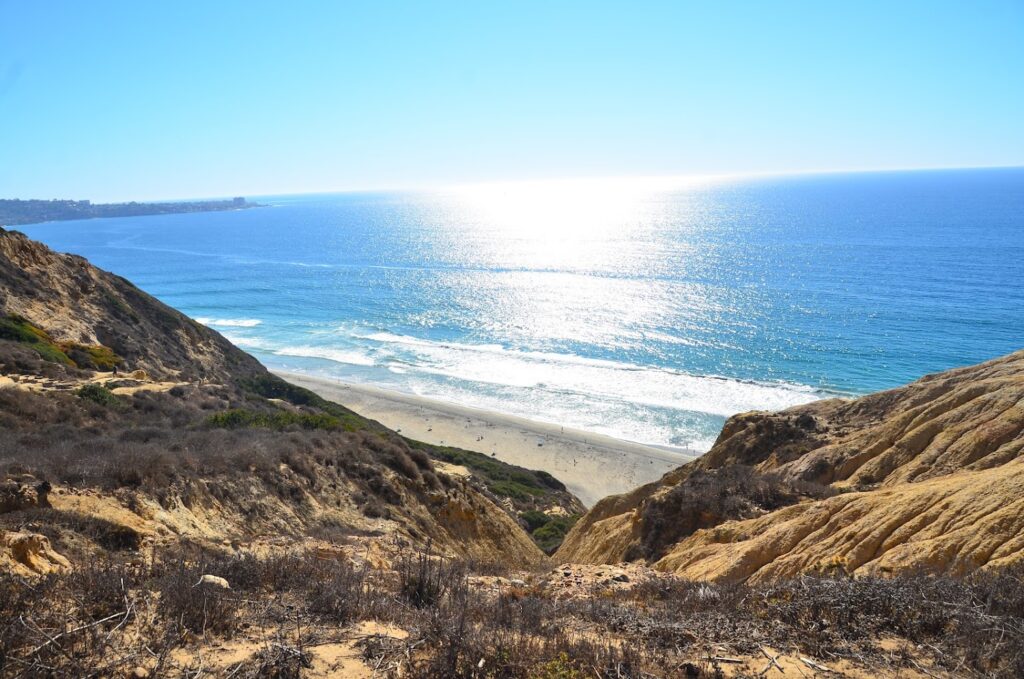
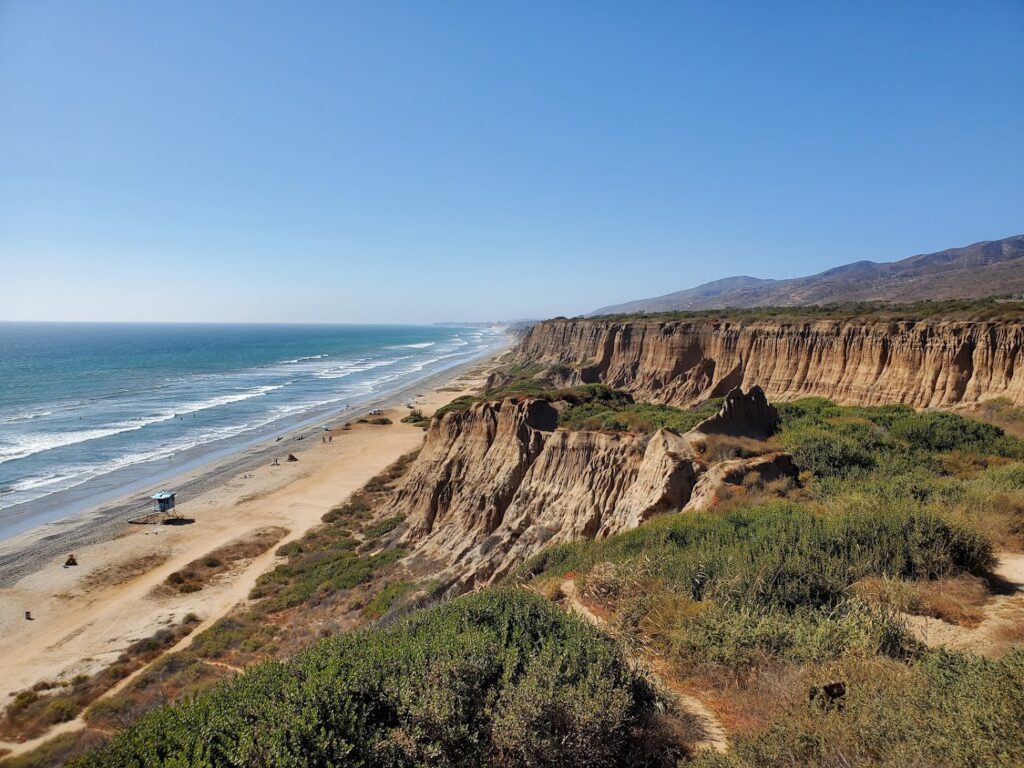
Black’s Beach is one of the most well-known clothing-optional beaches in North America — roughly 1.5 miles of shoreline tucked under 300-foot sandstone cliffs in La Jolla, between Torrey Pines State Beach and La Jolla Shores. The combination of difficult access, dramatic scenery, and long-standing community culture has made it genuinely distinct from other California beaches.
Location & Overview
The beach sits below the Torrey Pines mesa, accessible only by steep trail or a long walk along the shoreline. There are no concessions, no restroom facilities on the beach itself, and no lifeguard towers in the clothing-optional zone. The cliffs are unstable — rockfalls and landslides occur periodically, and UCSD’s safety resources explicitly recommend staying away from cliff bases and overhangs.
→ Explore the full Black’s Beach directory profile for address, details, and location map.
The beach has two distinct social zones. The southern end near the Gliderport attracts a mix of surfers and textile (clothed) visitors. The northern stretch — roughly past the trail bottom and heading toward the state beach boundary — is where clothing-optional culture is established and expected.
How to Get There
Route 1 — Gliderport Trail (most popular)
Drive to Torrey Pines Gliderport at 2800 Torrey Pines Scenic Drive, La Jolla. The trail descends steeply from the cliff edge — about 300 feet over a quarter mile. Short but genuinely steep; wear shoes with grip and go slow on the way back up. Not recommended if you have knee problems or are carrying heavy gear.
Route 2 — South Beach approach (easier, longer)
Park at Torrey Pines State Beach South Beach lot and walk north along the shoreline — roughly a mile or more. No cliff descent, better for those with more gear or who prefer a flat approach.
Route 3 — La Jolla Farms Road (paved, safest)
The intersection of La Jolla Farms Rd and Black Gold Rd has a gated paved road, closed to vehicles but open to pedestrians during daylight hours. About 0.5 miles down to the beach with a restroom at the bottom. Free street parking, limited to 2 hours on weekdays.
→ See Blacks Beach Trailhead in our directory
Route 4 — Sir Francis Drake Rd / Ho Chi Minh Trail
Starting from Sir Francis Drake Rd in the La Jolla Farms neighborhood. Scenic with coastal views but terrain is unmaintained and steep — not recommended for first-timers.
→ See Blacks Beach Trail in our directory
Parking
| Option | Cost | Notes |
|---|---|---|
| Torrey Pines Road (roadside) | Free | Walk to Gliderport or South Beach trailhead |
| Gliderport dirt lot | Free | Fills by 9 AM on weekends |
| Torrey Pines State Beach South Lot | $12–25 | Demand-based pricing, open 8 AM–sunset |
| La Jolla Farms Road | Free | Very limited, time-restricted |
Weekday arrivals before 9 AM almost always find free street parking available. Weekend visits without early arrival usually mean the paid lot.
What to Expect
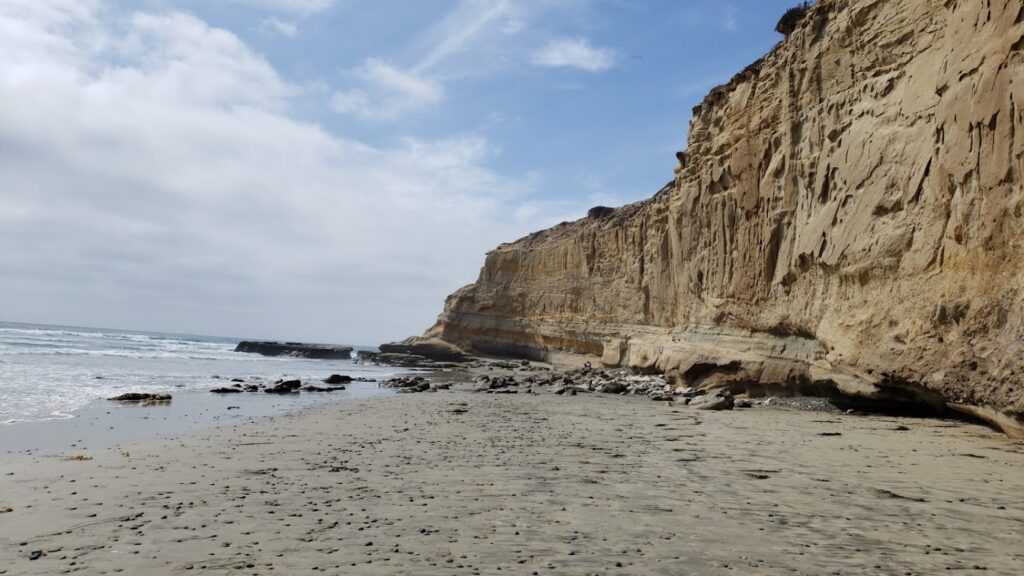
The vibe at Black’s Beach is relaxed and self-selecting — the difficult access filters out casual visitors and creates a more comfortable environment than you might expect. Most people are there to swim, sunbathe, or walk the shoreline. The northern section draws a predominantly adult crowd; the southern end near the Gliderport is more mixed.
Surfers use the water near the Gliderport year-round. The main nude area is quieter, with calmer sections of beach between rock outcroppings. On weekday mornings, you’ll have stretches of the beach almost entirely to yourself. Saturday afternoons in summer are a different story.
One thing worth knowing: bioluminescence occasionally lights up the water at night in late summer and early fall — blue-green waves caused by dinoflagellates. Black’s Beach is one of the better viewing spots in the county when it’s active, and some people time visits specifically for it.
Best Time to Visit
- Weekday mornings (Tuesday–Thursday, before 10 AM): least crowded, best parking, morning light on the cliffs
- Fall (September–November): warmest water temperatures, clearest skies, thinner crowds than summer
- Avoid: summer Saturday afternoons, any day after a major rainstorm (runoff, unstable cliffs)
What to Bring
- Sunscreen — and apply it everywhere. The cliff walls reflect UV and the exposure is higher than a typical beach
- More water than you think you need — no concessions, no water on the beach
- Shoes for the trail (flip-flops are bad for the Gliderport descent)
- A large towel or blanket — the sand gets hot
- Cash for parking if you’re arriving late
Safety
Rip currents are present at Black’s Beach and there are no lifeguards in the clothing-optional zone. UCSD’s beach safety guidance recommends only swimming near posted lifeguard towers, which are located on the southern textile sections of the beach. The cliff base is particularly dangerous — stay well clear of the walls regardless of where you sit.
Boneyard Beach (Encinitas) — Informal Clothing-Optional
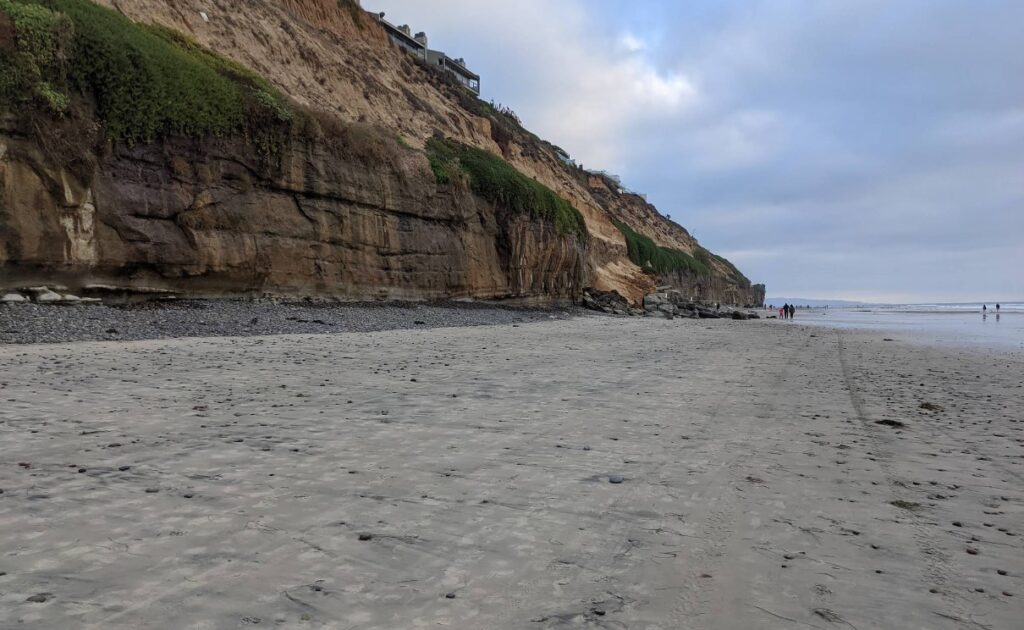
Boneyard Beach doesn’t have an official clothing-optional designation — it has isolation. Tucked under dramatic bluffs between Swami’s and D Street in Encinitas, the beach is difficult to reach without walking along the shoreline from a neighboring access point, which naturally keeps foot traffic low.
Location & How to Get There
There’s no direct trail down to Boneyard from the cliff above. The easiest approach is to park near D Street Beach in Encinitas, descend via the D Street staircase, and walk south along the shore. Alternatively, approach from Swami’s Beach to the south and walk north. The beach sits roughly in the middle — identifiable by the steeper, more dramatic cliff section and the noticeably thinner crowd.
Walk times from either access point are roughly 5–15 minutes depending on tide and pace. Check tide charts before visiting — at high tide, some sections of the shoreline become impassable and you could find yourself cut off.
Atmosphere & What to Expect
Boneyard is surfed regularly — the break here often runs larger than neighboring Swami’s and attracts experienced local surfers. On weekdays, the crowd is thin enough that clothing-optional behavior goes largely unnoticed. On warm weekends, through-traffic from surfers and casual beachgoers picks up and the dynamic changes.
CaliforniaBeaches describes it directly: the seclusion under the bluffs makes it “popular among those who like to be without clothing,” but it’s not a designated space and the experience depends entirely on who else is there that day. If privacy matters, weekday mornings are the only reliable option.
Parking & Facilities
Street parking along D Street and the small lot at Moonlight State Beach nearby. No restrooms or facilities at Boneyard itself — use the infrastructure at Moonlight or D Street before heading down.
San Onofre Trail 6 — For Maximum Seclusion
San Onofre is about an hour north of downtown San Diego near San Clemente — technically outside San Diego County — but it’s historically part of how Southern California nudists have described their options and worth including for completeness.
Location & Legal Status
San Onofre State Beach has six numbered trails descending from a coastal bluff to the beach below. The clothing-optional area is located south of Trail 6, in a section that sits outside the official state park boundary near the Camp Pendleton perimeter. The state park itself prohibits nudity; the informal nude zone is in the adjacent area beyond the park fence.
The legal status is genuinely ambiguous — nudity in state parks is prohibited, and the area near the military base boundary adds another layer of complexity. Citations have been issued here historically. This is the most legally uncertain of the three locations covered in this guide.
How to Get There
Exit I-5 at Exit 71 (Basilone Road), follow Old Pacific Highway to the park entrance, pay the day-use fee, and drive to the Trail 6 area at the southern end of the park road. Descend Trail 6 to the beach, then walk south. The informal nude area begins roughly a third of a mile south of the trail bottom, continuing toward the fence line.
What to Expect
More remote and more car-dependent than Black’s Beach, with a rougher beach environment — rockier entry, hotter sand, more wind. At its peak the area reportedly drew several hundred visitors on weekend days; current attendance is lower as the legal situation has become less predictable. Better suited to experienced visitors who specifically want the added seclusion.

Tips for First-Timers
If you’ve never been to a nude beach, Black’s Beach on a quiet Tuesday morning is about as approachable as it gets. A few things that actually matter:
Etiquette
- Don’t photograph people without explicit consent — this is the one firm social rule
- Bring a towel and sit on it rather than directly on shared surfaces
- Don’t stare. It sounds obvious, but it’s what makes the environment comfortable for everyone
Sun exposure
First-timers consistently underestimate UV exposure on areas of skin that don’t normally see sun. Apply sunscreen generously before you arrive, not after. Reapply every 90 minutes. A hat and sunglasses matter more here than at a regular beach.
Clothing is always optional
You’re never required to undress at any of these beaches. Many visitors stay partially or fully clothed — especially surfers, hikers passing through, and anyone arriving for the scenery rather than the clothing-optional culture.
A Note on Sources & Conditions
Trail conditions, cliff stability, and parking availability at Black’s Beach change seasonally and after weather events. The legal status of nudity at these locations reflects current enforcement patterns rather than formal legal authorization — conditions could change. For current cliff conditions and safety advisories, check the City of San Diego Lifeguards page and California State Parks before visiting. This guide covers publicly available information and does not constitute legal advice.
FAQ
Is Black’s Beach an official nude beach?
No — San Diego has no officially designated nude beaches. Black’s Beach operates as a de facto clothing-optional beach based on long-standing community practice and generally low enforcement, particularly on the state-managed northern section.
Can you get a citation for nudity at Black’s Beach?
Yes, it’s possible — particularly on the city-managed southern section. Enforcement is inconsistent and historically rare on the northern (state) section, but citations do occur. UCSD’s campus safety resources acknowledge this directly.
Is Black’s Beach safe for swimming?
The northern clothing-optional zone has no lifeguards and active rip currents. Swimming in that section carries more risk than at guarded beaches. For safer swimming in La Jolla, La Jolla Shores — about a mile southeast — has year-round lifeguard coverage. See our full guide to San Diego’s best swimming beaches.
Is Black’s Beach family-friendly?
That depends on your definition. The beach is clothing-optional, not adult-only — there’s no age restriction and families do visit. Whether it’s appropriate for children is a personal decision. The difficult trail access naturally limits visits with young children.
What is the easiest nude beach to reach near San Diego?
Black’s Beach via the South Beach / Torrey Pines State Beach approach is the most accessible — no steep trail, just a longer shoreline walk. Boneyard Beach in Encinitas is also reachable without a cliff descent.
When is Black’s Beach least crowded?
Tuesday through Thursday mornings, arriving before 9 AM. Fall (September–November) offers the warmest water with noticeably thinner crowds than the summer peak. Avoid holidays and summer weekends if solitude is the goal.
Are there restrooms at Black’s Beach?
Not in the clothing-optional zone itself. Restrooms are available at the Torrey Pines State Beach parking areas and at the Gliderport above. Plan accordingly.
How does Black’s Beach compare to other San Diego beaches?
For scenery, it’s among the most dramatic in the county — 300-foot sandstone cliffs, clear water, and relative seclusion. For amenities, it’s one of the most bare-bones. If you’re looking for guarded swimming, parking, and facilities, our complete San Diego beach guide covers the full range of options.